Why Obtaining a B Visa Is Important for Conducting Business in the United States
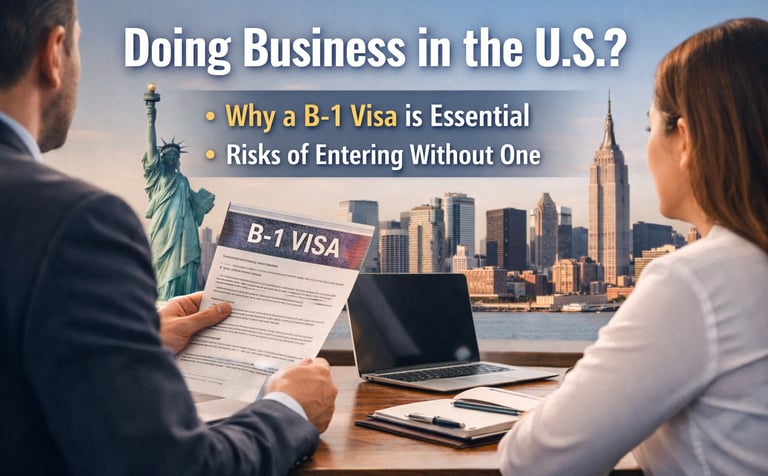
Obtaining the correct B-1 business visitor visa is essential for many foreign nationals who need to travel to the United States for legitimate commercial activities. Entering the U.S. without the proper visa — or using the Visa Waiver Program or a tourist classification incorrectly — can lead to denied entry, cancelled visas, or future immigration problems that may affect long-term business plans.
Andrew R. Sones Esq.
2/6/20263 min read
What the B-1 Business Visitor Visa Allows You to Do
The B-1 visa is designed for temporary business activities that do not involve employment in the United States. It enables international entrepreneurs, executives, and professionals to engage in important commercial functions while remaining employed and paid outside the U.S.
Common permitted activities include:
• Attending business meetings or negotiations
• Consulting with U.S. business partners
• Participating in conferences, trade shows, or industry events
• Exploring investment opportunities or opening a U.S. company
• Signing contracts or establishing commercial relationships
• Undertaking short-term training that does not involve productive U.S. work
These activities are lawful because the visitor is not entering the U.S. labour market and is not receiving U.S. wages.
Why the Correct Visa Classification Matters
U.S. immigration law focuses heavily on intent and authorised activity. Even legitimate business travellers can face serious consequences if they:
• Enter on a tourist classification while performing business functions
• Use the Visa Waiver Program for activities viewed as work
• Remain in the U.S. too long or make frequent back-to-back visits
• Appear to be managing a U.S. business day-to-day without work authorisation
When border officers believe someone is working without permission, they may cancel entry immediately.
Real-World Problems Caused by Not Obtaining a Proper B Visa
Business travellers frequently underestimate how strictly U.S. entry rules are enforced. Common issues include:
• Refusal of admission at the airport after questioning about meetings or company activities
• Cancellation of ESTA authorisation under the Visa Waiver Program
• Expedited removal orders that trigger multi-year bans from returning to the United States
• Difficulty obtaining future visas, including E-2 investor or L-1 intracompany transfer visas
• Damage to U.S. expansion plans due to immigration violations on record
In many cases, the underlying business activity was lawful — but the visa classification was wrong.
Examples of Activities That Can Raise Red Flags
Certain situations often lead to problems at the border, including:
• Hands-on work for a U.S. company or client
• Receiving payment from a U.S. source
• Running daily operations of a U.S. business
• Providing services directly to customers in the United States
• Spending extended periods in the U.S. through repeated short visits
These activities may require a work-authorised visa, not a B-1 visitor visa.
How the B-1 Visa Supports Long-Term U.S. Business Strategy
Using the correct B-1 classification helps protect:
• Future eligibility for investor visas such as E-2
• Eligibility for L-1 expansion visas when opening a U.S. office
• Credibility with U.S. consulates and border officers
• The ability to travel freely for meetings, negotiations, and growth planning
In short, the B-1 visa is often the first lawful step toward expanding business into the United States.
Common Misconceptions About Business Travel to the U.S.
“I can just use ESTA for business.”
Sometimes true for limited meetings, but risky if activities appear operational or work-related.
“I am not being paid in the U.S., so any activity is allowed.”
Incorrect. The key issue is entering the U.S. labour market, not only payment source.
“Border officers rarely check.”
False. Business travellers are routinely questioned, and electronic records make patterns easy to detect.
When Legal Advice Becomes Critical
Professional guidance is especially important when:
• You plan frequent or extended U.S. travel
• You are launching or investing in a U.S. company
• You previously experienced visa denial or border refusal
• You intend to transition later to E-2, L-1, or other work-authorised status
Early legal planning can prevent mistakes that are difficult or impossible to fix later.
How Crownside Legal Helps International Businesses Enter the U.S.
Crownside Legal, led by U.S. immigration attorney Andrew R. Sones, advises entrepreneurs, executives, and companies on:
• B-1 business visitor visa strategy and applications
• Permitted versus prohibited U.S. business activities
• Border-entry risk analysis and travel planning
• Transition from B-1 status to E-2 investor or L-1 expansion visas
• Resolving prior refusals, cancellations, or immigration violations
Clear planning ensures business travel supports — rather than harms — long-term U.S. expansion.
Frequently asked questions
Can I start a U.S. business on a B-1 visa?
You may form a company and take preparatory steps, but you cannot run daily operations or work in the U.S. without proper authorisation.
How long can I stay in the U.S. on a B-1 visa?
Admission is typically granted for up to six months, but the exact period is determined by the border officer.
What happens if I am refused entry?
You may face visa cancellation or future travel restrictions, making legal advice essential before travelling again.
Is a B-1 visa important if I plan to apply for an E-2 later?
Yes. Proper early compliance strengthens future investor visa applications.
Speak with a U.S. immigration lawyer experienced in UK-to-U.S. business travel
Learn more about Crownside Legal at
https://usalaw.co.uk/about
Schedule a free consultation at
http://www.calendly.com/crownside
Strategic immigration planning helps ensure your U.S. business travel is lawful, secure, and aligned with your long-term expansion goals.